Mold Removal & Remediation
Attic Mold Remediation in Frederick, MD
Attic mold remediation without fixing the ventilation is just a delayed repeat project. We remediate the mold growing on sheathing and rafters and address the condensation source — inadequate ventilation, blocked soffit vents, bath fans exhausted into the attic — so that the treated surfaces stay clean through Frederick's humid summers.
Surface Remediation vs. Sheathing Replacement
Most attic mold — Cladosporium and surface Aspergillus on OSB or plywood sheathing — responds to HEPA vacuuming, antimicrobial treatment, and sanding of the mold layer without requiring sheathing replacement. Sheathing replacement is reserved for structurally compromised material or deeply embedded Stachybotrys growth on cellulose sheathing with documented long-term saturation history.
Containment for Attic Remediation
Attic remediation generates significant disturbed spore load. We establish containment at the attic access hatch, create negative air pressure exhausted through a ridge or gable vent, and ensure the HVAC system is shut down or sealed at the return air during remediation to prevent spore distribution through the duct system.
Clearance After Treatment
Post-remediation air sampling inside the attic and on the floor below confirms that spore levels have returned to ambient after treatment. Attic clearance sampling is technically more challenging than basement sampling because outdoor spore infiltration through vents is normal — we interpret results in context of the ventilation design and the outdoor control sample collected simultaneously.
Combining Mold Treatment with Ventilation Correction
The economics of attic mold remediation change significantly when ventilation correction is deferred. A remediation project that costs $1,500–$3,000 for sheathing treatment will cost the same amount again in 2–3 years if the condensation source is unchanged. Adding soffit baffles, correcting a bath fan exhaust, or installing additional ridge vent at the time of remediation is far less expensive than a second mobilization.
We include a ventilation correction scope in every attic remediation estimate so you can make an informed decision. When ventilation work is coordinated alongside remediation, we sequence the projects — remediation first, ventilation work second, clearance sampling after both are complete.
Insulation Removal When Required
Blown-in insulation that has been contaminated by dripping condensate from the sheathing above, or that has served as a substrate for mold growth, must be removed before sheathing treatment and reinstalled after clearance. We remove, bag, and dispose of contaminated insulation as part of the remediation scope when readings indicate it's affected.
Treating Both Sides of the Sheathing
Sheathing mold in attics grows primarily on the underside (interior face) of the sheathing panels. Access to treat the roof deck surface (exterior face) would require roofing removal. We treat what we can access thoroughly — the full interior attic surface — and document that the exterior is not accessible without structural work.
Personal Protective Equipment at Attic Level
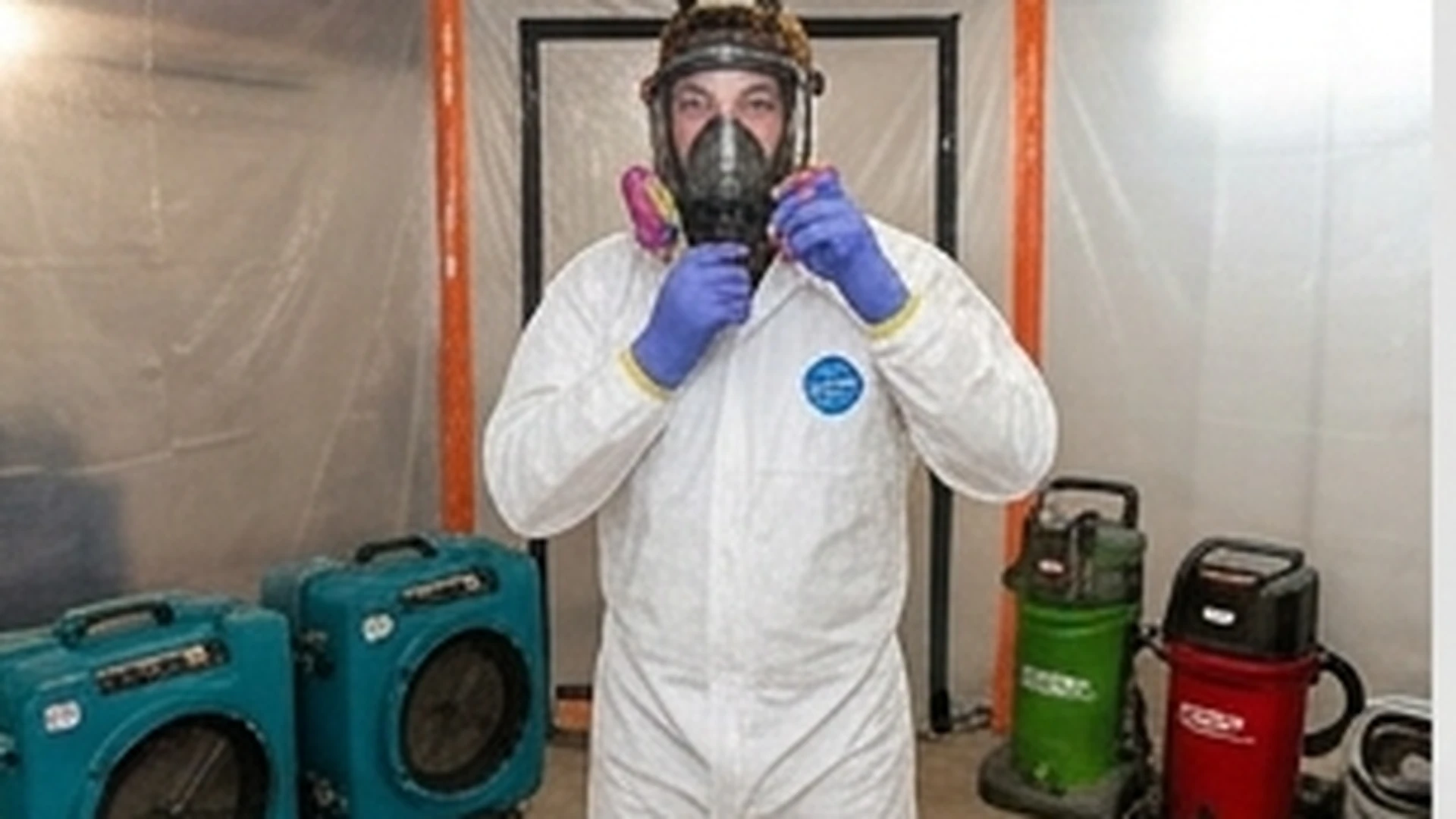
Attic remediation is a hot, confined-space environment with high spore concentrations during disturbance. Our crews work in minimum N95 respirators with full Tyvek suits for surface remediation and supplied-air or full-face respirators when Stachybotrys is confirmed or suspected. PPE level is matched to the genus and scope found in inspection sampling.
Structural Wood Treatment
After HEPA vacuuming and mold removal from rafter surfaces, exposed wood is treated with an EPA-registered antimicrobial product and, where warranted, an encapsulant that bonds to the wood surface to prevent minor residual hyphae from becoming a regrowth source. Encapsulant is white or clear and visually confirms treated coverage.
Attic Mold Remediation Process
- Containment and Air Setup — Attic access sealed, negative air established, HVAC return sealed or system shut down.
- Insulation Removal (If Required) — Contaminated insulation removed and bagged inside containment before sheathing work begins.
- Sheathing and Rafter Treatment — HEPA vacuum, physical mold removal or sanding, antimicrobial application, and encapsulant where indicated.
- Ventilation Correction and Clearance — Ventilation work completed; independent clearance sampling confirms acceptable spore levels before insulation reinstallation.
Black or gray growth on your attic sheathing? We remediate and fix the source.
Does attic mold mean I need a new roof?
Almost never. Attic mold is a ventilation and condensation issue in the vast majority of cases — it has nothing to do with roof membrane integrity. Replacing the roof without addressing ventilation would result in new sheathing developing the same mold pattern within a few winters. We address the condensation source; roof replacement is almost never part of our scope.
My home inspector found attic mold — will this kill my real estate deal?
Not if it's remediated properly and documented. Attic mold found during a home inspection is a common negotiation point in Frederick real estate transactions. We provide written estimates and clearance documentation timed to fit most due-diligence windows. Many transactions close with the seller completing remediation and providing clearance results before closing, or with a price adjustment that covers the buyer's cost of post-closing remediation.
How long does attic mold remediation take?
A typical attic remediation — sheathing and rafter treatment without major insulation removal — takes 1–2 days. Projects requiring full insulation removal and replacement are 2–3 days of active work. Clearance sampling results take 3–5 business days to return from the lab.