Prevention & Restoration
Insulation Removal After Mold in Frederick, MD
Insulation is one of the most mold-susceptible materials in a building. Batt insulation is typically fiberglass or mineral wool facing with a Kraft paper vapor barrier — the paper facing is cellulose, and it supports mold growth when wetted. Blown-in insulation absorbs and retains moisture. Neither can be dried to a condition that eliminates contamination once mold has colonized the facing or the mass. Contaminated insulation must come out.
Why Insulation Cannot Be Cleaned and Left In Place
Mold remediation standards don't allow cleaning insulation materials as an alternative to removal when those materials meet the removal threshold. The mold hyphae penetrate into the insulation mass and paper facing in ways that HEPA vacuuming and antimicrobial treatment cannot reach throughout the material. The only way to eliminate the contamination is to remove the material entirely and dispose of it as contaminated waste.
Attic Blown-In Insulation — The Most Common Removal Scenario
Attic mold remediation almost always requires removal of blown-in insulation over contaminated attic floor areas. Blown-in insulation that has been in contact with condensate dripping from contaminated sheathing, or that has been wet from a roof leak above, is contaminated through its full depth. We use insulation vacuum equipment to extract blown-in insulation and HEPA-filtered collection bags for disposal.
Crawl Space Batt Insulation Removal
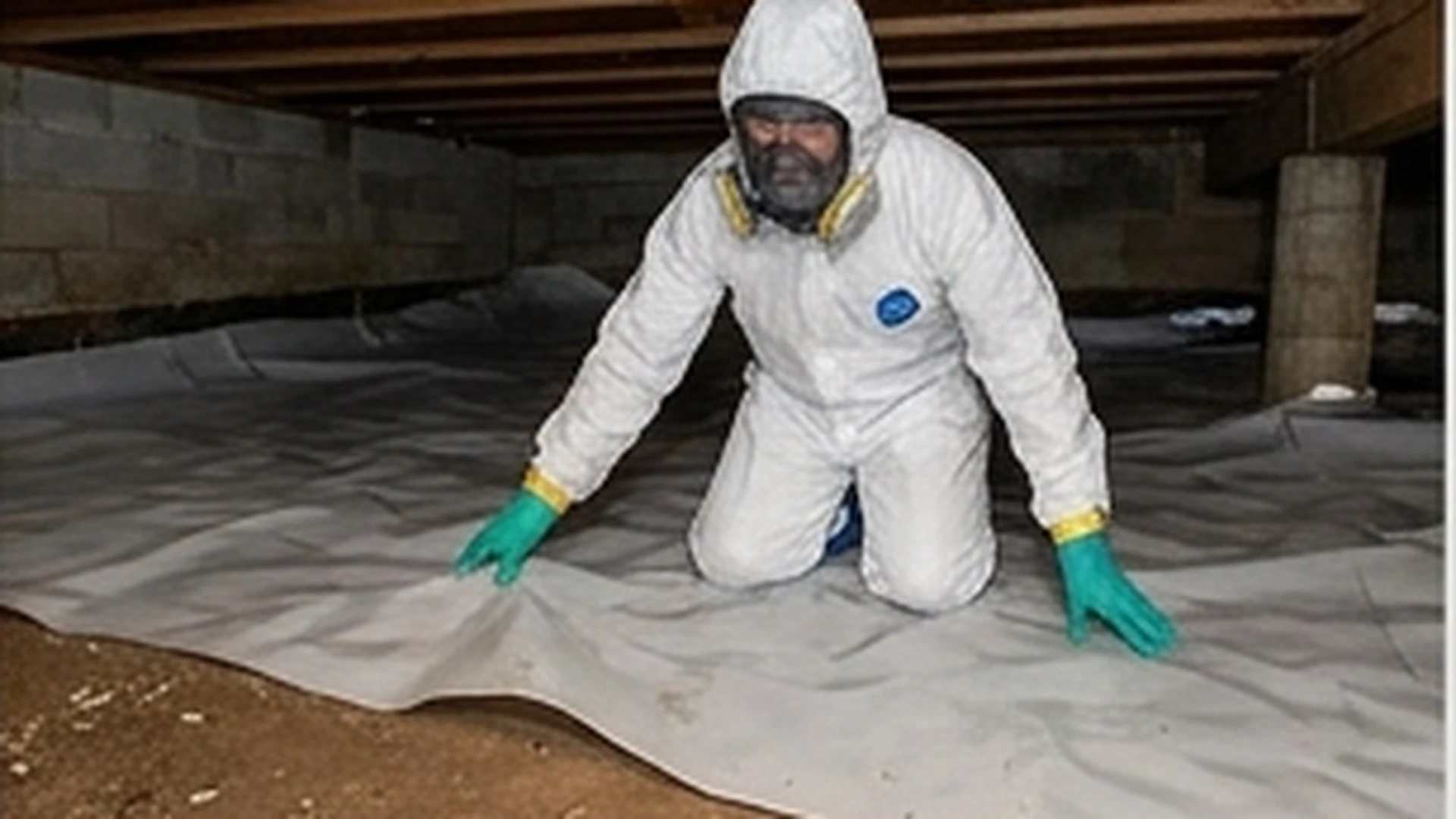
Batt insulation hanging from crawl space floor joists — especially common in Frederick homes built before sealed crawl space became standard practice — is chronically exposed to high humidity and frequent condensation. Most crawl space batt shows some degree of Kraft paper facing mold. When moisture readings in the crawl space indicate sustained high humidity, crawl space batt insulation is typically removed as part of any crawl space moisture control project.
Insulation Removal as Part of Remediation vs. Standalone Service
Insulation removal most commonly occurs as a component of a broader mold remediation project — attic mold remediation requires insulation removal to access the sheathing; basement or crawl space mold remediation requires removing insulation that's been in the contaminated zone. In these cases, insulation removal is priced as part of the remediation scope.
Insulation removal also occurs as a standalone service: a homeowner who had remediation performed by another contractor and now wants to upgrade to a sealed, unvented crawl space needs crawl space batt removed before new insulation can be installed. An attic where a prior remediation was done without insulation removal needs the contaminated insulation extracted before clearance sampling. We provide standalone insulation removal scoped to the specific need.
Containment During Insulation Removal
Contaminated insulation removal generates significant particulate — mold spores, insulation fibers, and disturbed debris. We establish containment and negative air pressure before any insulation is disturbed, particularly in attic and crawl space environments where containment at the access point prevents cross-contamination into the living area below during the removal process.
Rigid Foam Insulation — Less Common, Still Removable
Rigid foam board insulation — XPS, EPS, or polyiso — is not a mold substrate in the way that Kraft-faced batt is. However, rigid foam installed in a wet location can trap moisture against adjacent structural materials, and the adhesive or mechanical fasteners used to attach it often create a boundary where mold grows on the wood or concrete surface behind the foam. When rigid foam needs to come off for structural surface remediation, we remove it cleanly and document the condition of the substrate beneath.
Spray Foam Removal
Two-part spray polyurethane foam (SPF) at rim joists and in crawl spaces is generally not a mold substrate, but it can be installed over wood surfaces that subsequently develop mold, making those surfaces inaccessible for inspection or treatment. When SPF needs to be removed for access to moldy substrates behind it, we remove it mechanically and document the substrate condition.
Insulation Reinstallation Guidance
After insulation removal and successful remediation, we provide reinstallation guidance: what insulation type is appropriate for the location (crawl space, attic, rim joist), what vapor control strategy is correct for the climate zone (Frederick is IECC Climate Zone 4), and what R-value meets current code requirements. We don't install new insulation as part of our scope, but we specify what the reconstruction contractor should install.
Insulation Removal Process
- Scope Assessment — Insulation type, area, and contamination extent documented; removal scope defined in writing before work authorization.
- Containment and Access Setup — Attic hatch or crawl access sealed with poly; negative air established; crew in appropriate PPE including N95 respirators minimum.
- Extraction and Bagging — Blown-in vacuumed into HEPA-filtered bags; batt removed in sections and double-bagged; all debris bagged inside containment before removal from space.
- Substrate Assessment and Cleanup — Structural surfaces exposed by insulation removal assessed for mold; HEPA vacuumed and treated as part of the remediation scope; reinstallation guidance provided.
Mold in your insulation can't be cleaned — it has to come out safely.
Do I need to remove all the insulation in my attic if only part of it is contaminated?
Not necessarily. If the mold is localized to a specific area — under a section of contaminated sheathing, near a failed roof vent penetration — we scope the removal to the affected zone. Blown-in insulation removal is straightforward to scope by area; we extract only the area that requires removal and leave the unaffected insulation in place. The scope boundary is defined by moisture readings and visual assessment of the insulation condition.
What does it cost to remove insulation after mold?
Cost depends on insulation type, square footage, depth (for blown-in), and access difficulty. Attic blown-in removal is typically priced per square foot of area. Crawl space batt removal is priced by the linear foot of joist bay. We provide written estimates based on actual measurements; we don't provide meaningful per-square-foot estimates without seeing the space, because attic pitch, access constraints, and insulation depth significantly affect labor costs.
What should replace the insulation I removed?
For attic floors: blown cellulose or fiberglass to code R-value (R-49 to R-60 for Frederick's climate zone is current recommendation). For rim joists: two-component spray polyurethane foam as both insulation and air barrier. For crawl space: after a sealed crawl space moisture control installation, insulation moves from the floor joists to the crawl space walls and rim joist — open-cell spray foam at the rim joist and rigid foam on the foundation walls is the current best practice for Frederick's climate. We specify the appropriate reinstallation in writing as part of the removal project deliverable.