Mold Removal & Remediation
Bathroom Mold Removal in Frederick, MD
Bathroom mold is the intersection of guaranteed moisture, organic substrates, and typically inadequate ventilation. Grout lines, caulk joints, drywall behind tile, and subfloor below leaking shower pans are the four locations where bathroom mold most commonly develops beyond what surface cleaning can address. We assess each and remediate appropriately.
Behind-Tile Drywall: The Hidden Problem
Standard drywall installed as the substrate behind ceramic tile in wet areas is not waterproof. Failed caulk at corners, cracked grout, and shower valve penetrations allow water to migrate through the tile assembly onto the drywall paper behind it. The drywall paper is an ideal mold substrate. By the time mold is visible on grout surfaces, the drywall behind the tile has often been wet and colonized for months.
Shower Pan Integrity and Subfloor Moisture
A cracked or failed shower pan leaks water into the subfloor and floor framing below with every shower use. Subfloor moisture from a chronic shower leak commonly exceeds 20% MC in the affected area — well above the 16% threshold — and the sustained wetting duration makes Stachybotrys a likely finding. We probe subfloor moisture at the shower perimeter before finalizing remediation scope.
Exhaust Ventilation — Required, Not Optional
Bathroom exhaust fans are required by code for a reason. An unvented bathroom — or one with a fan venting into the ceiling cavity rather than to the exterior — maintains near-100% relative humidity for hours after each shower. At that humidity level, any cellulose material in the bathroom grows mold. We include exhaust correction in our bathroom mold scope when the ventilation is inadequate.
How We Scope Bathroom Mold Removal
Bathroom mold remediation scope is driven by what we find behind the visible surfaces. A moisture meter probe at the grout line tells us whether the drywall behind the tile is wet. A reading at the shower perimeter floor tells us whether the subfloor has absorbed water from a pan leak. Those readings — not the visible surface condition — determine whether we need to open the wall assembly and what materials need to come out.
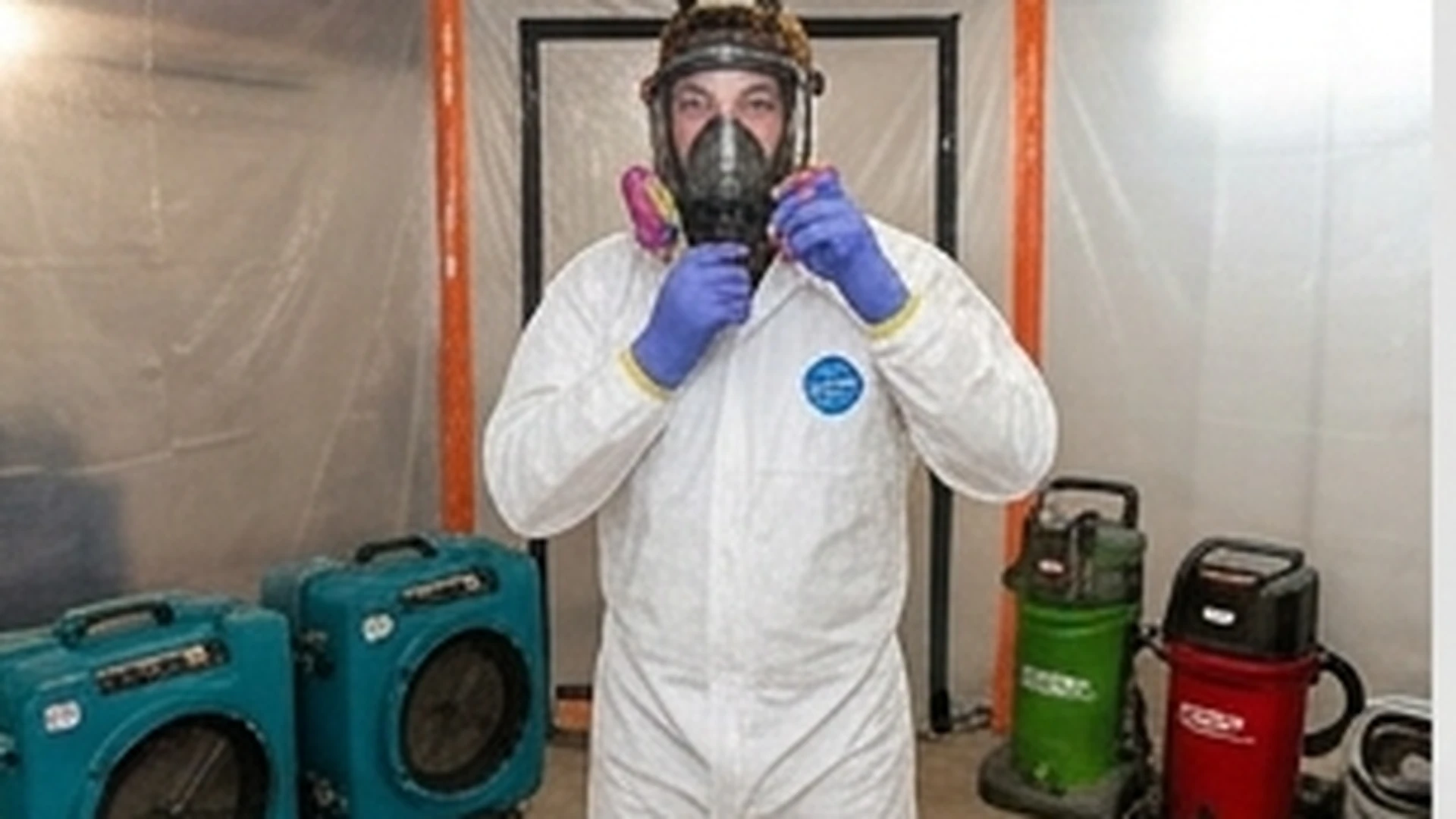
When we need to remove tile and drywall to access affected structural materials, we do so inside a contained work area. Bathroom containment is more involved than an open basement — we seal the doorway and use negative air to exhaust disturbed spores to the exterior rather than into the adjacent bedroom or hallway. After remediation, the structural surfaces are verified to dry standard and cleared for reconstruction before any new cement board, drywall, or tile work begins.
Surface vs. Penetrating Mold — Different Treatments
Mold on tile surfaces and non-porous grout is a surface condition addressable with HEPA vacuuming and antimicrobial cleaning. Mold in the grout pores or on the drywall paper behind the tile has penetrated the substrate and cannot be cleaned to remediation standard — those materials need to come out. We make this determination with physical probing and moisture meter readings, not guesswork.
Caulk Joints and Sealant Failure
Caulk at tub/shower-to-floor and tub/shower-to-wall joints has a service life of 5–7 years under normal use. Failed caulk allows water to wick behind the surround continuously. We assess caulk integrity during inspection and include caulk joint recaulking in remediation scope as a moisture source correction, not as a cosmetic item.
Mold in Bathroom Ceiling Drywall
In bathrooms without exhaust fans or with fans that have failed, the ceiling drywall is often the first surface to develop mold — it collects condensate from shower steam. Ceiling drywall mold that extends beyond a small isolated patch typically requires removal and replacement rather than surface cleaning.
Coordination with Tile Contractor for Reconstruction
After remediation and clearance, the bathroom needs reconstruction — cement board, waterproofing membrane, and new tile. We coordinate with trusted tile contractors in Frederick to sequence reconstruction directly after clearance results are received, minimizing the time the space is out of service.
Bathroom Mold Removal Process
- Moisture Assessment — Probe readings at tile assembly, subfloor perimeter, ceiling, and adjacent wall cavities to define scope before any demolition.
- Containment Setup — Door sealed with poly barrier and zipper, negative air machine installed and exhausting to exterior.
- Demolition and Remediation — Affected tile, drywall, cement board, and subfloor removed as indicated by moisture readings; structural surfaces HEPA vacuumed and antimicrobial treated.
- Dry Standard Verification and Clearance — Moisture readings confirm dry standard; clearance sampling authorizes reconstruction.
Mold in the shower, on the ceiling, or under the tile? Let's find out what's really there.
Can I just regrout and recaulk to fix bathroom mold?
If the mold is genuinely limited to the surface of grout or caulk and the substrate behind the tile is dry and unaffected, recaulking and regrouting addresses the problem. Most homeowners who ask this question have mold that has been present long enough to have penetrated behind the tile assembly — in which case recaulking is a temporary cosmetic fix that delays more expensive remediation. A moisture probe assessment answers the question definitively for about $150 and saves thousands in mistimed repair costs.
What kind of drywall should go back after bathroom mold remediation?
Cement board (cementitious backer board) is the correct substrate behind tile in wet areas. It has no paper facing and no organic content — it cannot support mold growth. Standard drywall, even moisture-resistant "green board," should not be used directly behind tile in showers or tub surrounds. We specify cement board in all bathroom reconstruction scopes.
Is bathroom mold dangerous?
The common Cladosporium and Aspergillus/Penicillium found in most bathroom mold situations cause respiratory irritation, particularly for sensitive individuals, but aren't generally considered high-hazard at typical concentrations. The concern escalates if you have immunocompromised household members, persistent respiratory symptoms, or if Stachybotrys is identified — which requires chronic wetness beyond typical bathroom humidity. An inspection and, if warranted, sampling clarifies the risk level for your specific situation.