Mold Removal & Remediation
Basement Mold Remediation in Frederick, MD
Basement mold remediation in Frederick requires more than cleaning visible growth off concrete block. It requires establishing what's causing the chronic moisture, removing affected materials that can't be cleaned to dry standard, and restoring the below-grade environment to conditions that won't support regrowth — all while protecting the rest of the home from cross-contamination during the process.
Containment Before Any Demolition
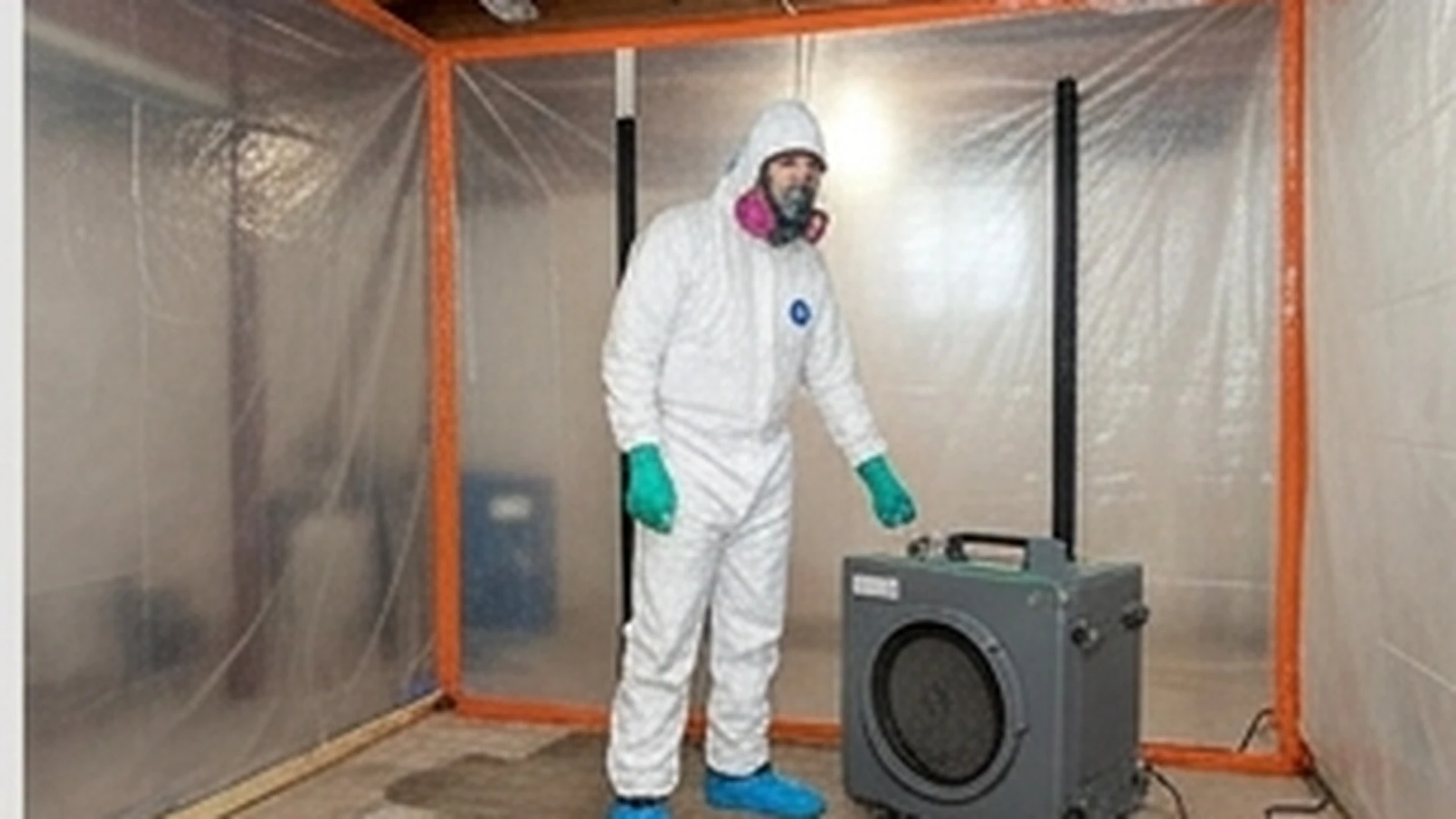
Before any material removal begins, we establish a poly containment barrier at the basement stairway and any mechanical penetrations connecting the basement to upper floors. Negative air pressure maintained by a negative air machine exhausted to the exterior prevents disturbed spores from migrating into living areas during demolition.
Drywall Removal: When It's Required
Finished basement drywall that has been exposed to Category 2 or 3 water, sustained wetting beyond 72 hours, or shows Stachybotrys-indicative saturation must be removed — it cannot be dried in place and cleaned to acceptable levels. We remove in sections, bag debris inside the containment zone, and dispose of it as contaminated material.
Concrete and Block — What Can and Can't Stay
Mold on non-porous concrete and block surfaces can often be physically removed by HEPA vacuuming and antimicrobial treatment. Porous materials — batt insulation, wood framing, cardboard, drywall — that show mold penetration beyond the surface require removal. We make this distinction material-by-material rather than applying a blanket policy that either under-remediates or over-demolishes.
The Full Basement Remediation Scope
A properly scoped basement remediation addresses three things: the mold that's present, the materials that harbor it and need to be removed, and the moisture conditions that allowed it to develop. Skipping the third item — moisture correction — means scheduling the same remediation again in 18 months.
Our scope includes physical containment, HEPA vacuuming of all affected surfaces, controlled demolition of porous materials meeting removal thresholds, antimicrobial treatment of structural surfaces that remain, drying to dry standard with moisture meter verification, and post-remediation clearance air sampling to confirm the space is clean. If moisture correction — waterproofing, drainage, dehumidification — is needed, we identify it and coordinate the correction with the remediation timeline.
Rim Joist Remediation
Mold on rim joist framing — one of the most common findings in Frederick basements — is addressed by removing affected insulation, HEPA vacuuming the framing, applying antimicrobial treatment, and verifying dry standard before re-insulating. Spray foam rim joist insulation is the preferred reinstallation method because it both insulates and seals the air barrier.
Stored Contents and Personal Property
Cardboard boxes, fabric items, and paper materials stored in basements are often the primary food source for basement mold — more so than the framing. We assess stored contents for mold growth and moisture exposure, identify what is salvageable with HEPA vacuuming and cleaning, and document items that should be discarded.
HEPA Vacuuming and Antimicrobial Treatment
After affected porous materials are removed, all remaining structural surfaces are HEPA vacuumed to remove settled spores, then treated with an EPA-registered antimicrobial agent. HEPA vacuuming captures particles as small as 0.3 microns — standard vacuums recirculate mold spores into the air.
Clearance Sampling Before Reconstruction
After remediation is complete and containment removed, we coordinate independent clearance air sampling. Reconstruction — reinstalling drywall, insulation, flooring — does not begin until clearance results confirm indoor spore levels are at or below outdoor ambient concentrations.
Basement Remediation Process
- Containment Setup — Poly barriers at all openings, negative air machine installed and operational, crew in appropriate PPE before any demolition.
- Controlled Demolition — Affected drywall, insulation, and non-salvageable materials removed and bagged inside containment for disposal.
- Surface Remediation — HEPA vacuuming of all remaining structural surfaces, followed by antimicrobial treatment and moisture meter verification to dry standard.
- Clearance Sampling — Independent air samples collected after containment removal; reconstruction authorized only after acceptable results are confirmed.
Black growth on your basement walls or framing? Let's scope the remediation.
Can I clean basement mold myself with bleach?
Bleach on a non-porous concrete surface kills surface mold, but it doesn't address mold growing inside porous materials like wood framing or drywall paper. In those materials, the bleach penetrates too shallowly to reach the mold hyphae embedded in the substrate. Disturbing mold without containment also disperses spores into the air and throughout the home. For any mold growth beyond a small surface area on non-porous material, professional remediation with containment is the appropriate approach.
How long does basement mold remediation take?
A typical single-room basement remediation takes 1–2 days for the remediation work, plus 3–5 business days waiting for clearance sampling results. More extensive projects — full basement with significant drywall removal or contents remediation — can take 3–5 days of active work. We provide a timeline estimate as part of the written scope before work begins.
Does my homeowner's insurance cover basement mold remediation?
Coverage depends on the cause. Mold resulting from a sudden, accidental water event (e.g., a burst pipe) is generally covered under the water damage provision, with mold remediation as a related expense. Mold from long-term moisture or flooding is often excluded. We document causation in our scope report to support your insurance claim, and can work directly with adjusters when the claim is in process.
Basement Mold Inspection
Assessment and moisture mapping before remediation scope is finalized.
Crawl Space Moisture Control
Vapor barriers and dehumidification to prevent moisture recurrence after remediation.
Post-Remediation Verification
Clearance air sampling to confirm remediation is complete before reconstruction.