Water & Moisture Solutions
Leak-Related Mold Cleanup in Frederick, MD
Slow plumbing leaks are the most common mold cause in Frederick homes that aren't associated with flooding or visible water damage. A pinhole leak in a supply line, a dripping drain connection, or a leaking wax ring can deposit water into the wall cavity or subfloor for months before it's noticed — long past the 72-hour threshold for Stachybotrys colonization and well into territory requiring full mold remediation protocols.
The Under-Sink Cabinet Scenario
Drain p-trap connections under kitchen and bathroom sinks are one of the most common slow-leak locations. The cabinet interior is dark, rarely inspected, and contains the organic debris that mold needs to thrive. By the time discoloration is noticed on the cabinet floor, the wall stud cavity behind the cabinet has often been wet and colonized for months. We probe moisture at the cabinet back wall and adjacent drywall before scoping any under-sink mold project.
Behind-Wall Supply Line Leaks
Compression fittings, soldered joints, and push-to-connect fittings inside wall cavities can develop slow leaks over years without any surface indication until the mold colony is large enough to produce a musty odor or the drywall begins to buckle. We use thermal imaging and pinless moisture meters to map the extent of moisture migration in wall cavities before opening them.
Toilet and Wax Ring Leaks
A failed wax ring seal at the toilet base routes sewage water into the subfloor cavity with every flush — Category 3 water at a low but continuous rate. Subfloor and floor joist exposure to Category 3 water is a mandatory removal trigger regardless of the moisture meter reading at the time of discovery. The biological contamination doesn't dry away.
Scoping Leak Mold — Wall Cavity Assessment Before Opening
The right approach to leak-related mold cleanup starts with understanding the extent of moisture migration before any walls are opened. Thermal imaging identifies temperature anomalies on wall surfaces that indicate wet framing cavities. Pinless moisture meters scan wall surface EMC without surface penetration. Pin meters confirm and quantify at flagged points. This assessment sequence gives us a defensible demolition scope that removes everything that's affected and avoids unnecessary opening of walls that are dry and unaffected.
Once walls are opened at the scope boundary, we reassess the framing cavity directly — moisture readings at stud faces, plates, and any blocking — and extend the scope if the cavity shows moisture migration beyond the initial assessment perimeter. It's more common to extend scope at this stage than to reduce it; water in wall cavities typically travels further than thermal imaging can detect.
Plumber Coordination Before Remediation Begins
Leak-related mold remediation requires the leak to be repaired before or concurrent with the remediation. Remediating a mold-affected wall cavity while the leak is still active is a waste of effort. We coordinate timing with the plumber — repair first, or in parallel for complex projects — so that moisture meter readings during remediation reflect the post-repair state, not ongoing intrusion.
Duration Assessment — How Long Was It Leaking?
The longer a leak has been active, the more likely Stachybotrys colonization is present on cellulose materials, and the broader the moisture migration zone in the wall cavity. We gather information about when the leak likely started — staining patterns, water bill anomalies, when odor first appeared — to inform the genus-identification decision and whether pre-remediation sampling is warranted.
Cabinet and Flooring Removal
Under-sink cabinets and floor cabinets that have been subjected to chronic leak moisture may have compromised structural integrity in addition to mold colonization. We assess whether cabinets can be cleaned and salvaged or need to be removed for access and replaced. Cabinet removal is coordinated with the remediation scope rather than treated as a separate remodeling decision.
Post-Remediation Verification at Affected Zone
After remediation and drying, clearance air sampling is taken inside the formerly contained area. Pre-closure moisture readings at every point of the remediated zone confirm dry standard before any cabinet reinstallation, drywall, or flooring reconstruction begins. Both results go into the project record as documentation of completed remediation.
Leak-Related Mold Cleanup Process
- Leak and Extent Assessment — Leak source confirmed repaired or repair scheduled; thermal imaging and moisture mapping define affected zone.
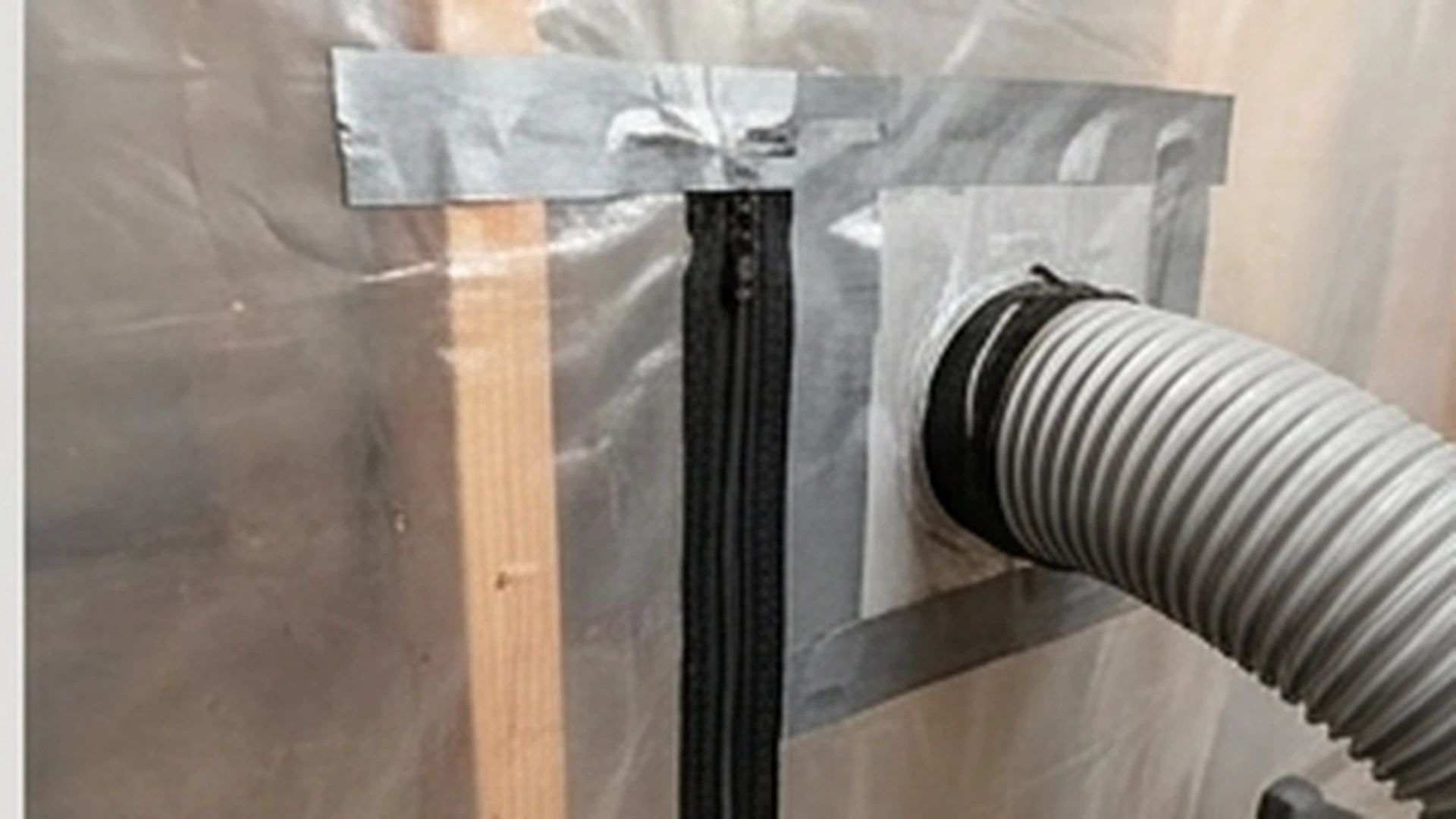
- Containment and Demolition — Poly containment established; affected drywall, cabinet components, and flooring removed to dry-verified scope boundaries.
- Cavity Remediation and Drying — Exposed framing HEPA vacuumed and antimicrobial treated; drying to dry standard with daily moisture monitoring.
- Clearance and Pre-Closure Verification — Air sampling and final moisture readings documented before reconstruction authorization issued.
Leak repaired but mold left behind? We clean up what the water left in the walls.
The leak was fixed months ago — does mold still need to be remediated?
Yes. Mold that colonized framing or drywall during the wet period doesn't die when the leak is repaired — it goes dormant at lower humidity but the colony remains viable and can reactivate if moisture conditions change. More practically, the mold hyphae embedded in porous materials are still there and still a source of spores. Remediation of the affected materials is required to resolve the contamination, regardless of how long ago the leak was fixed.
Can I just replace the drywall myself without professional remediation?
Replacing drywall without containment, HEPA vacuuming, and antimicrobial treatment of the framing behind it leaves the contamination source in place while covering it with new material. Self-performed drywall replacement also disperses spores throughout the house during the demolition phase without containment. For mold in wall cavities, professional remediation with proper containment is the correct approach.
How do I know if my insurance will cover leak-related mold cleanup?
Coverage depends on the cause and duration. Sudden pipe failures are typically covered. Slow drip leaks that developed over time — often classified as "gradual damage" — are frequently excluded. The key is the causation documentation: was this a sudden failure or chronic seepage? We document the conditions we find, and the plumber's assessment of the failure mechanism contributes to the claim narrative. We recommend submitting the claim and letting the adjuster make the coverage determination with full documentation.
Moisture Mapping
Thermal imaging and meter readings to define the leak's full moisture migration path.
Drywall Mold Removal
Contained demolition of mold-affected drywall in leak-affected wall cavities.
Bathroom Mold Removal
Remediation for tile, subfloor, and drywall affected by bathroom plumbing leaks.